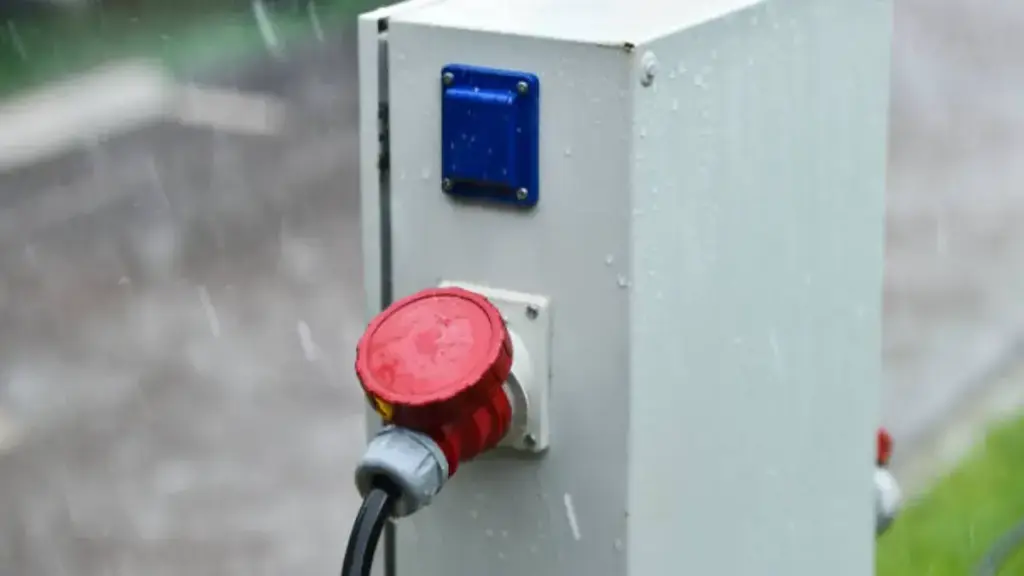
The wrong NEMA 3R rating for an outdoor installation can expose electrical equipment to moisture, polvo arrastrado por el viento, or washdown conditions beyond the enclosure’s intended protection. Using an enclosure that is not rated for the site’s dust or washdown conditions can increase the risk of equipment damage, maintenance issues, and premature failure.
This guide explains the Type 3R requirements defined under ANSI/NEMA 250, including rain protection, drainage provisions, the 5 psi water spray test, and when NEMA 4 or 4X may be a better choice.
What Is a NEMA 3R Rating and Why It Matters?

A NEMA 3R rating indicates that an enclosure is designed to provide outdoor protection against rain, aguanieve, and external ice formation while offering a cost-effective solution for suitable applications.
We define the NEMA 3R rating under the ANSI/NEMA 250 standard for both indoor and outdoor applications, alongside other NEMA enclosure types. It serves as the baseline standard for equipment that needs to survive outside without the high cost of fully sealed, gasketed systems.
Core Protection Capabilities and Environmental Limits
A NEMA 3R enclosure provides physical defense against natural elements. Instead of providing the broader sealing performance of higher-rated enclosures, Type 3R relies on enclosure construction and drainage to manage outdoor rain exposure.
NEMA 3R provides protection against several specific outdoor hazards:
- Personnel Safety: It guards technicians and the public against accidental contact with hazardous, live parts.
- Falling Dirt: It blocks gravity-driven debris and solid foreign objects from entering the cabinet.
- Precipitation: It keeps out the harmful effects of rain, aguanieve, y nieve.
- External Ice: The enclosure remains undamaged even when heavy ice layers form on the outer metal.
You must also recognize where this rating fails. Because NEMA 3R does not provide the same level of sealing as higher-rated enclosures, it is not intended to protect against certain conditions:
- Windblown Dust: High winds can force fine dust, sand, or agricultural fibers through the vents.
- High-Pressure Washdowns: Type 3R is not intended for hose-directed water or washdown conditions.
- Condensation: Temperature swings can create condensation inside an outdoor enclosure. Depending on the climate and internal heat load, a heater, breather, or other moisture-control measure may be needed.
Common Industry Applications and Selection Guidelines
You will find NEMA 3R enclosures deployed across commercial infrastructure and utility systems where budget and reliable weather resistance must balance perfectly.
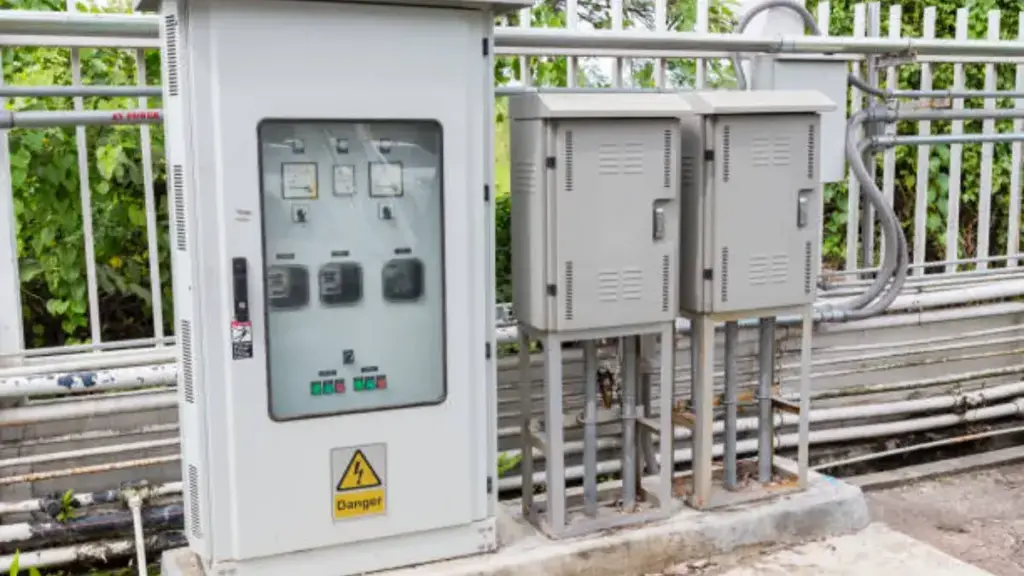
Typical commercial and utility installations for custom outdoor electrical cabinets include:
- Utility Metering: Meter sockets, meter mains, and service-entrance devices on building walls.
- HVAC Infrastructure: Rooftop condensing unit disconnect switches and mechanical room controls.
- Distribución de energía: Outdoor panelboards, general-use load centers, and automatic transfer switches.
To manage water without relying on expensive sealing gaskets, manufacturers use gravity and geometry. Overhanging drip edges deflect falling rain away from the door seams, while baffled, hooded vents allow heat to escape without creating a direct path for incoming water. If water enters the enclosure during normal exposure, drainage provisions allow it to escape rather than accumulate inside. Drainage openings are commonly sized within the NEMA-specified range of about 3.2 a 6.4 milímetros, unless a baffled opening or drainage fitting is used.
When choosing a cabinet, NEMA 3R can be a cost-effective option for outdoor equipment when the site primarily requires protection against rain, aguanieve, and external ice. If the installation also involves windblown dust, agua dirigida por manguera, or corrosive conditions, a higher enclosure Type such as NEMA 3, 4, or 4X may be more appropriate.
- Upgrade to NEMA 4: Choose this standard when the site requires regular washdown cleaning or direct hose spray.
- Upgrade to NEMA 4X: Choose this standard when chemical vapors, coastal salt spray, or highly corrosive industrial pollutants threaten to rust bare metals.
NEMA 3R Enclosure Protection Requirements
NEMA 3R enclosures shield electrical components from rain, nieve, and physical contact using gravity drainage and baffled ventilation instead of airtight gaskets.
Environmental and Personnel Ingress Standards
NEMA 3R standards focus on defending internal hardware from seasonal weather while keeping personnel safe. Because these enclosures are not completely airtight, they rely on specific design geometries to manage water entry.
- Weather Protection: Shields internal electrical gear from rain, nieve, and sleet, ensuring external ice buildup does not cause structural damage.
- Personnel Safety: Restricts physical access to hazardous live parts through the use of solid barriers and baffled openings.
- Water Spray Performance: Withstands a rigorous water spray test that simulates wind-driven rain at 34.5 kPa (5 psi) pressure for one continuous hour.
- Ingress Management: Safely channels any water that enters so it drains away completely without wetting live electrical components or wiring.
Drainage, Ventilación, and Installation Practices
Installation practices can affect how well a NEMA 3R enclosure performs in the field. Proper mounting and drainage are important because water must be able to leave the enclosure without accumulating around electrical components.
- Weep Holes: Uses drainage provisions that allow water to escape rather than accumulate inside the enclosure. Where drainage openings are used, their dimensions should follow the applicable NEMA requirements or the manufacturer’s listed design.
- Condensation Control: Temperature swings may cause condensation inside the enclosure, so additional moisture-control measures may be considered based on the application and climate.
- Mounting: Install the enclosure according to the manufacturer’s instructions and keep drainage openings unobstructed so accumulated water can escape as intended.
- Cable and Conduit Entry: Use properly rated hubs, fittings, and entry points to prevent water from tracking into the enclosure and to maintain the required enclosure rating.
Premium Custom Enclosures Engineered to Last
NEMA 3R Rating vs. Other NEMA Protection Standards
NEMA 3R provides a cost-effective outdoor weather baseline, but it lacks the dust sealing of NEMA 3 and the high-pressure washdown protection of NEMA 4.
Selecting the right enclosure requires matching environmental realities with physical construction limits. Moving from clean, indoor control rooms to unpredictable outdoor environments alters your physical design priorities entirely.
Comparing NEMA 3R with NEMA 1 and NEMA 3 Estándares
Indoor and outdoor baselines differ fundamentally. While some enclosures only keep operators safe from contact, outdoor units must manage direct environmental exposure.
- NO 1 to NEMA 3R Upgrade: Upgrade from NEMA 1 to NEMA 3R when moving electrical enclosures from dry indoor environments to outdoor locations with rain and snow exposure.
- Windblown Dust Protection: Choose NEMA 3 instead of NEMA 3R for environments with significant windblown dust, sand, or airborne debris, as NEMA 3 provides protection against windblown dust that NEMA 3R does not.
- Rain Management: NEMA 3R uses weather-resistant construction and drainage features to manage rain exposure rather than providing the fully sealed protection associated with higher-rated enclosures.
NEMA 3R is well suited to many outdoor utility applications where protection from rain, aguanieve, and external ice is the primary requirement.
Comparing NEMA 3R with NEMA 4, 4incógnita, y 12 Ratings
When an installation involves washdown, polvo arrastrado por el viento, or corrosive exposure, a higher enclosure Type may be more appropriate. Heavy washdowns, airborne dust, aceites, or chemical exposure may require a more highly protected enclosure type, depending on the application.
- Hose-Directed Washdowns: Select NEMA 4 or 4X for food processing or industrial washdown areas where enclosures face direct high-pressure hose sprays.
- Corrosive Environments: Specify NEMA 4X for coastal, chemical, or pool areas where corrosion protection is necessary, as standard NEMA 3R has limited chemical resistance.
- Indoor Industrial Fluids: Use NEMA 12 o 13 for indoor industrial settings exposed to flying dust, hilas, and dripping non-corrosive liquids like oils or coolants.
- Baseline Economy: NEMA 3R serves as a cost-effective default for standard outdoor utility and distribution panels, reducing costs compared to highly sealed options.
Using NEMA 3R can help control costs in suitable outdoor applications, while sites with dust, lavado, or corrosion concerns may require NEMA 3, 4, 4incógnita, or another appropriate enclosure Type.
Common Applications for NEMA 3R Enclosures

NEMA 3R enclosures provide cost-effective, rainproof protection for outdoor electrical systems where windblown dust and high-pressure washdowns are not present.
Power Distribution and Service Entrance Systems
Standard electrical distribution relies heavily on NEMA 3R enclosures for building exteriors. These systems face direct rain, aguanieve, and snow but do not require complex, expensive dust seals.
- Utility Metering and Sockets: Outdoor utility metering equipment, meter sockets, and combination service-entrance devices on residential and commercial building exteriors.
- Service Entrance Gear: Service entrance switchboards, load centers, and outdoor electrical panelboards exposed to rain and snow.
- Technician Safety Switches: Safety switches and HVAC disconnects mounted on rooftops or exterior walls to provide safe power isolation for technicians.
- Backup Power Distribution: Automatic transfer switches (ATS) and mobile power distribution assemblies operating in nonhazardous outdoor environments.
Engineers specify NEMA 3R as the default for utility interfaces because it provides the level of rain, aguanieve, and external-ice protection required for many outdoor utility applications.
Commercial Controls, Telecom, and Infrastructure Systems
Modern public infrastructure and communications hardware require weather protection that can handle temperature swings and condensation. NEMA 3R cabinets offer the venting and drainage necessary for active electronic components.
- Exterior Lighting and Irrigation: Lighting control panels and contactors for parking lots, streets, and building facades, as well as irrigation controllers in landscaped areas.
- Outdoor Telecommunications: Outdoor telecommunications equipment, public Wi-Fi nodes, and low-voltage networking hardware mounted on poles or exterior structures.
- Renewable Energy Systems: Solar power system inverters, PV combiner boxes, and electrical control cabinets for wind and distributed generation systems.
- Municipal Infrastructure: Traffic signal controller cabinets, parking lot metering systems, and public infrastructure equipment requiring reliable weather protection.
For these applications, the drainage design of a NEMA 3R enclosure helps prevent water from accumulating inside, reducing the risk of moisture reaching sensitive low-voltage connections.
How to Select the Right NEMA 3R Enclosure
Select a NEMA 3R enclosure by matching standard outdoor rain and snow protection against your specific site dust, lavado, and thermal management needs, as part of a broader electrical enclosure selection process.
| Selection Factor | NEMA 3R Capability | Action / Alternative |
|---|---|---|
| Precipitation (Lluvia, Snow) | Protects live parts, includes drainage holes (3–6 mm). | Standard choice for weather-exposed sites. |
| Windblown Dust | No protection against windblown particulates. | Upgrade to NEMA 3 o 4 if dust load is high. |
| Hose Washdowns | Not rated for pressurized or directed water jets. | Use NEMA 4 or 4X in washdown environments. |
| Corrosive Elements | Basic finish; does not guarantee high corrosion resistance. | Specify 304/316 Stainless Steel or NEMA 4X. |
Evaluating Environmental Hazards and Protection Limits
Outdoor enclosure selection starts with the actual conditions at the installation site. While NEMA 3R acts as a standard defense against vertical weather, the rating has clear limits that should be compared with the conditions at the installation site.
- Primary Hazards: Verify that rain, aguanieve, and snow are the only atmospheric threats, and ensure the site does not experience heavy windblown dust or sand.
- Water Exposure Limits: Confirm the area remains completely free of high-pressure washdowns, process-water sprays, or hose-directed cleaning.
- Agentes corrosivos: Check the surrounding air for coastal salt spray, active chemical fertilizers, or wastewater gases that would quickly degrade standard coatings.
- Ground-Level Drainage: Examine the terrain to guarantee zero risk of localized flooding or standing pools rising above the bottom of the enclosure.
Choosing an enclosure without considering these conditions can increase the risk of moisture or particulate exposure to the equipment inside. If you face fine airborne particulates or chemical vapors, bypassing the 3R baseline for a higher enclosure rating may be necessary.
Determining Mechanical, Eléctrico, and Material Requirements
Weather protection is only one part of enclosure selection. You must balance the physical layout, structural materials, and thermal performance to keep the internal electrical components working reliably.
- Thermal Load Management: Calculate the cumulative heat output from variable speed drives, power supplies, or transformers to decide if you need passive ventilation or electrical enclosure cooling systems.
- Selección de materiales: Painted carbon steel and aluminum suit many general applications, while humid, costero, or corrosive environments may call for stainless steel or a more corrosion-resistant finish.
- Cable Routing: Place all conduit hubs and cable entry points on the sides or bottom to stop water from tracking down the wires toward live terminals.
- Drainage Openings: Keep the drainage provisions unobstructed and follow the applicable NEMA requirements or manufacturer’s listed design for opening size and placement.
Since NEMA 3R relies on shedding water rather than blocking it entirely, proper placement of internal devices is critical. Where practical, position sensitive electrical connections away from areas where water could accumulate during severe weather.
Why Choose SHIJIE for Custom NEMA Enclosures?
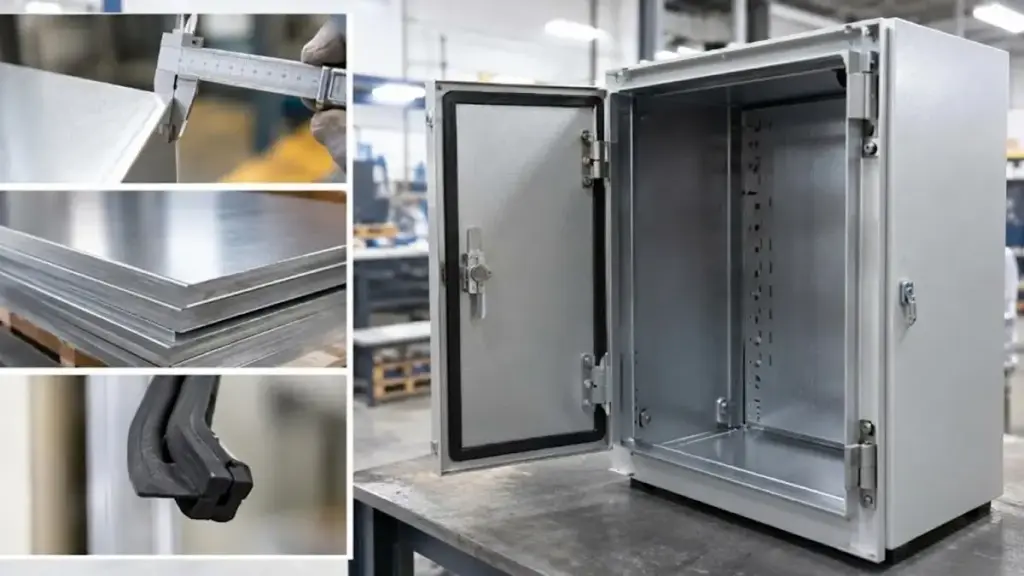
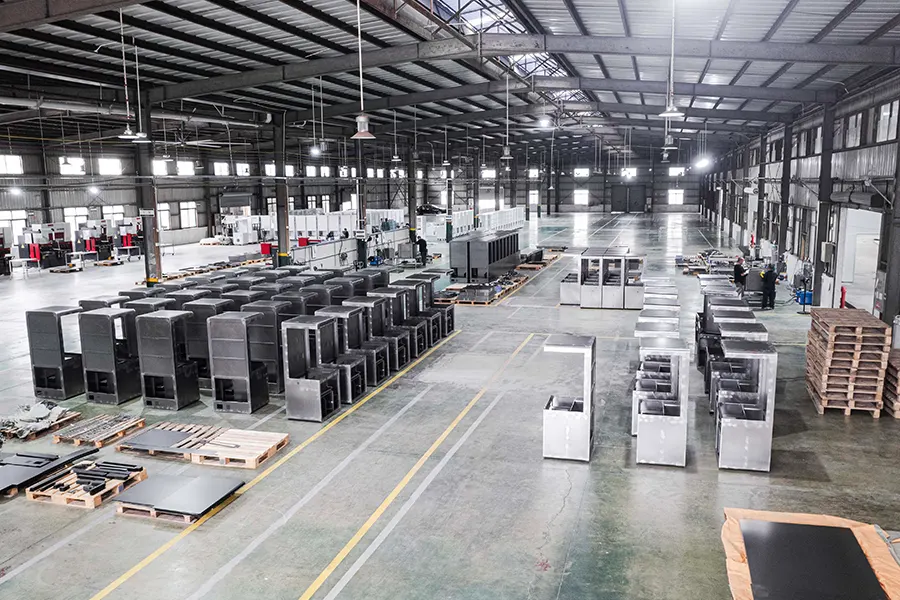
The right NEMA rating is only part of enclosure performance. The enclosure also needs to match your equipment dimensions, material requirements, mounting method, entrada de cable, ventilación, and production volume. SHIJIE provides custom metal enclosure manufacturing for OEMs, system integrators, and equipment brands, with support from design and prototyping through mass production. Our capabilities cover acero galvanizado, acero carbono, acero inoxidable, y aluminio, with customization for dimensions, cutouts, mounting structures, acabados superficiales, and enclosure configurations. For projects requiring NEMA 3R protection, SHIJIE also offers galvanized steel enclosure options designed around outdoor weather-protection requirements. Customers can provide drawings, muestras, or application requirements, and our engineering team can help turn them into manufacturable enclosure designs. This approach allows you to move beyond a standard enclosure and develop a housing that fits the equipment, environment, and production requirements of the project.
Preguntas frecuentes
What is a NEMA 3R enclosure used for?
NEMA 3R enclosures house electrical and electronic components in indoor and outdoor installations. They safeguard equipment from rain, aguanieve, nieve, falling dirt, and external ice. Typical applications include outdoor utility metering, electrical distribution panels, HVAC disconnect switchboards, outdoor lighting controls, and irrigation control boxes.
Is NEMA 3R waterproof?
No. NEMA 3R enclosures are designed to protect against rain, aguanieve, and external ice, but they are not intended to provide watertight protection against hose-directed water or immersion. Their construction includes weather-resistant features and drainage provisions to manage water that may enter the enclosure. For applications involving high-pressure water jets, regular washdowns, or possible water submersion, NO 4, 4incógnita, o 6 may be more appropriate.
What is the difference between NEMA 3 and NEMA 3R?
The primary difference is protection against windblown dust. NO 3 provides protection against windblown dust in addition to rain, aguanieve, and external ice, while NEMA 3R does not provide the same level of protection against windblown dust. As a result, NEMA 3R is often a more economical choice for outdoor applications where rain and snow are the primary environmental concerns and windblown dust is not a major factor.
Does NEMA 3R protect against dust?
NEMA 3R does not protect against windblown dust, fine airborne particulates, or suspended dust. It only protects against gravity-driven falling dirt. For environments with high dust exposure, such as deserts, agricultural fields, plantas de cemento, or woodworking facilities, select NEMA 3, 4, o 12 recintos.
Can NEMA 3R enclosures be used outdoors?
Sí, NEMA 3R enclosures are specifically designed for outdoor environments and provide protection against rain, aguanieve, y formación de hielo externo. They can be a cost-effective choice for outdoor electrical equipment when these are the primary environmental concerns. In coastal or corrosive environments, however, you should evaluate the enclosure material, surface finish, and required corrosion protection. Areas exposed to high-pressure washdowns or hose-directed water may also require a higher enclosure Type, such as NEMA 4 or 4X.
What materials are used for NEMA 3R enclosures?
Manufacturers construct NEMA 3R enclosures from galvanized carbon steel, aluminio, acero inoxidable (typically grades 304 o 316), and non-metallic composites like fiberglass-reinforced plastic or polycarbonate. Carbon steel offers structural strength at a lower price point but requires galvanized or powder-coated finishes to resist rusting. Aluminum and non-metallics provide excellent weight savings and natural corrosion resistance.
Pensamientos finales
Selecting a properly rated NEMA 3R enclosure can balance project cost with the level of outdoor weather protection required by the application. While unrated, cheap alternatives lower your upfront construction costs, they expose delicate electrical components to water ingress and catastrophic field failures. Using properly rated enclosures helps protect the equipment inside and reduce the risk of weather-related failures and downtime.
Avoid guesswork when protecting your infrastructure. We recommend starting with a sample order to evaluate our manufacturing quality and drainage design under real-world conditions. Reach out to our engineering team today to review your project specifications or request our complete enclosure catalog.