Choosing between an IP54 and an IP55 enclosure comes down to a single digit, and that digit changes what the box is tested against. Both codes share the same dust protection: the leading 5 lets some dust in but keeps enough out that the equipment still runs safely. The entire decision lives in the second number.
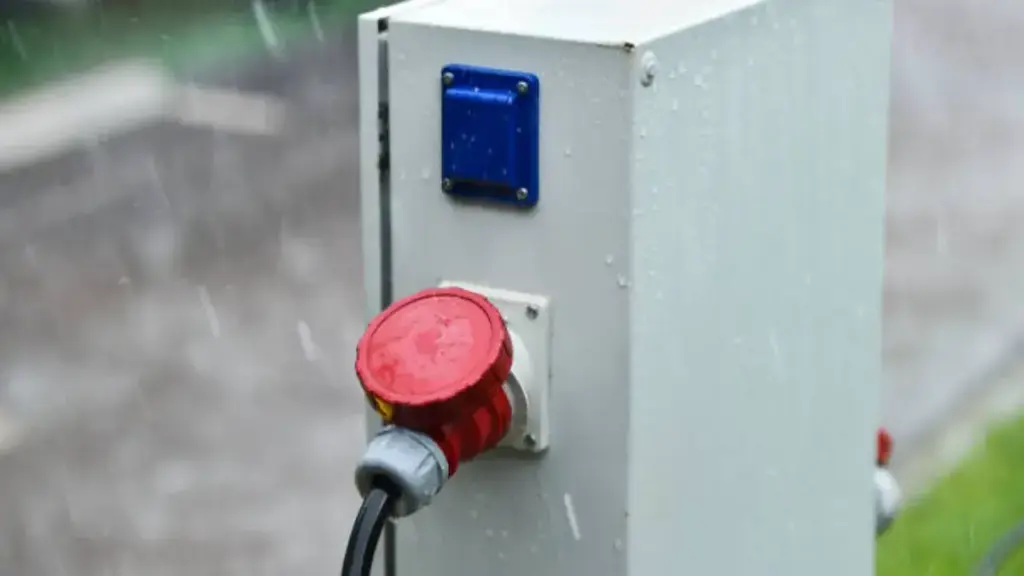
IP55 makes the enclosure stand in front of a 6.3 mm water jet flowing 12.5 L/min, held 2.5 に 3 metres away. IP54 stops at a close-range oscillating spray. That gap is why a pole-mounted cabinet shrugs off a driving coastal storm while the same box, rated only IP54, takes water at the first sideways gust.

Key takeaways
- Same dust digit: IP54 and IP55 both carry solids code 5, dust protected but not dust-tight.
- One real difference: only the water digit changes, 4 (splash) versus 5 (jet).
- IP55 rig: ある 6.3 mm nozzle, 12.5 L/min, aimed from 2.5 に 3 m for at least 3 分.
- IP54 rig: an oscillating spray that bathes the box from close range, all sides, no focused jet.
- The trap: IP55 is not a stronger jet than IP65, it is a focused one, so washdown bays still need IP65 or IP66.
- Buy to the exposure: match the rating to how water actually reaches the site, not to the bigger number.
IP54 vs IP55 at a Glance
Read the two codes side by side and the shared half jumps out. IP54 and IP55 are the same dust story wearing different water coats. If a datasheet only shows the two characters, you are comparing one variable while pretending the other changed.
| What the code covers | IP54 | IP55 |
|---|---|---|
| First digit (solids) | Code 5: dust protected, some ingress allowed | Code 5: identical dust protection |
| Second digit (liquids) | Code 4: protection from water splashed from any direction | Code 5: protection from a low-pressure water jet |
| Water test rig | Close oscillating spray over every face | 6.3 mm nozzle jet held 2.5 に 3 m away |
| Survives on site | Occasional driven rain, light weather | Sustained wind-driven rain, blowing spray |
| Does not cover | Hose jets, ウォッシュダウン, submersion | Pressure washdown, standing water, submersion |
One boundary the codes never cross: neither code says anything about impact, corrosion or UV. Those live in separate standards. An IP55 box with a thin painted skin in salt air still rusts; the rating never promised it would not.
What the First Digit Covers
Both codes make the identical dust claim, and the wording behind it is looser than buyers expect. Code 5 lets dust enter, but never in a quantity that stops the equipment from running safely. That is protection, not a vacuum seal.
For a real site this matters more than the number suggests. Code 5 handles pollen, light workshop grit, roadside dust and farm chaff, where a little ingress every season never bridges a terminal or jams a hinge. What code 5 will not hold is a fine conductive or abrasive powder under constant load, which is where a dust-tight 6 earns its keep.
The honest move is to stop treating the first digit as the buying lever, because IP54 vs IP55 does not differ on it at all. If your enclosure faces welding fume, metal powder or flour dust, that is a different fight. Compare code 5 against a dust-tight 6; our IP rating explained guide walks that full ladder.
What the Second Digit Adds
The second digit grades how much water the enclosure shrugs off, and in the IP54 vs IP55 decision this single number is the whole argument. Digit 4 promises protection against water splashed from any direction. Digit 5 promises protection against a low-pressure water jet from any direction.
The words sound close; the rigs are not. Splash means droplets arriving from many angles with no sustained stream pressing on one seam. Jet means a coherent column of water held at distance and swept across the housing, forcing its way toward gasket lines, knockouts and cable glands. That difference is where the buy is won or lost.
Building to an IP54 or IP55 spec?
How the Two Jet Tests Differ
The two water tests differ in geometry, not muscle. Neither rig hammers the enclosure. One bathes it from close range; the other points a focused stream at it from across the room.
IP55 does not face a stronger spray than IP54. It faces the same modest water held farther away and aimed at the seams.
| Test parameter | IPX4 splash rig | IPX5 jet rig |
|---|---|---|
| Water delivery | Oscillating spray, all directions | Single focused jet, swept over every face |
| Nozzle | No focused bore; the stream is spread | Bore of 6.3 mm |
| Flow | Low intensity, no sustained stream | 12.5 L/min, roughly 6% 許容範囲 |
| Stand-off | Close to the sample | 2.5 に 3 メートル |
| Duration | Enough to wet every surface | About 1 min per m², at least 3 分 |
The numbers settle the misconception: the jet test is farther and focused, not hotter. The stream is no brute: it arrives as one coherent column, 2.5 metres out, walking slowly across every seam the enclosure has. Duration closes the picture: roughly one minute per square metre of surface, and never less than three minutes total.
That geometry decides which openings fail. IEC 60529 rig presses water at gasket lines, knockouts and cable glands — the three places cheap outdoor boxes leak first. A splash test never loads those edges; a jet test loads nothing else.
One more consequence the datasheet crowd misses: IP65 runs the identical water test, because its second digit is also a 5. The step from IP54 to IP65 buys a dust-tight 6 and the same jet. Any argument about “IP65 being much more watertight than IP55” is about dust, not water.
What IP55 Adds to the Build
Passing the jet is a build story, and the build differences are visible before you read any certificate. Four details separate a real IP55 enclosure from an IP54 box wearing a new label.
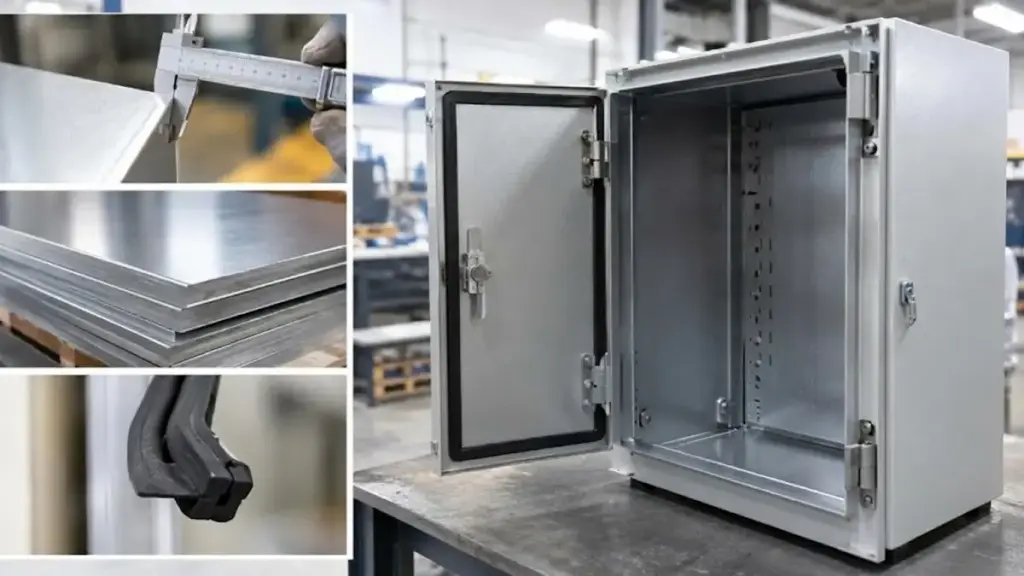
The gasket runs in a groove. Splash-rated boxes can get away with foam stuck to a flange overlap. A jet aims 12.5 L/min at that flange for three minutes. So the sealing element sits in a continuous groove, compressed by the flange itself, with a compression limit that stops bolts squeezing it flat and ruining it.
Cable entries carry the same code. The most common field failure is not the box. It is a knockout with a clamp around a cable, or a gland one rating class below the enclosure it passes through. Under IP55 duty, every entry point belongs to the same ingress path. Ask any field technician which seal failed first, and the answer is almost never the box body.
The door lies flat. A jet sweeps the door perimeter, and a wobbling lid with an uneven flange gap shows the test exactly where its seal is weakest. Bolt pitch matters for the same reason: fewer, closer fasteners hold gasket pressure even around the corners.
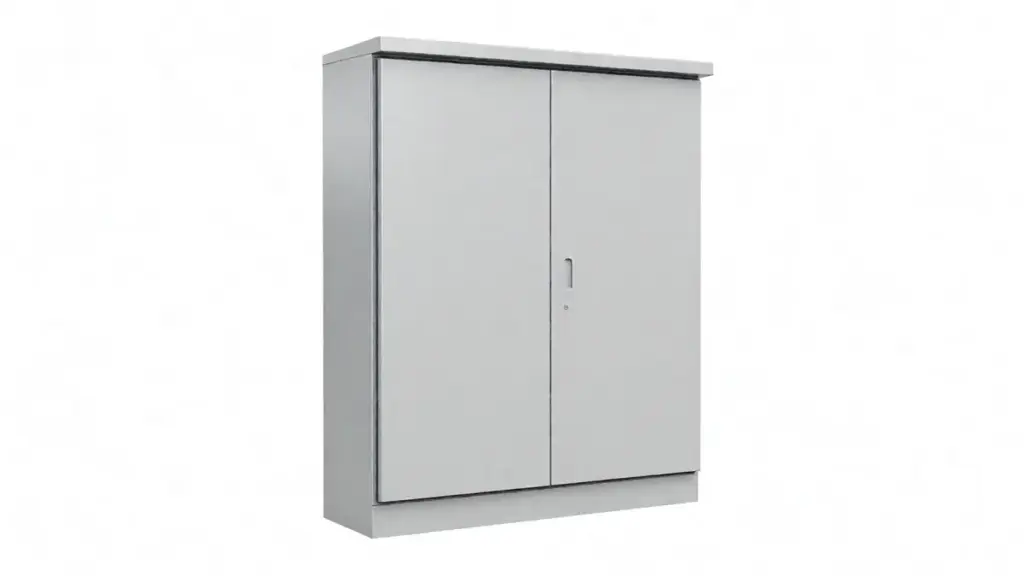
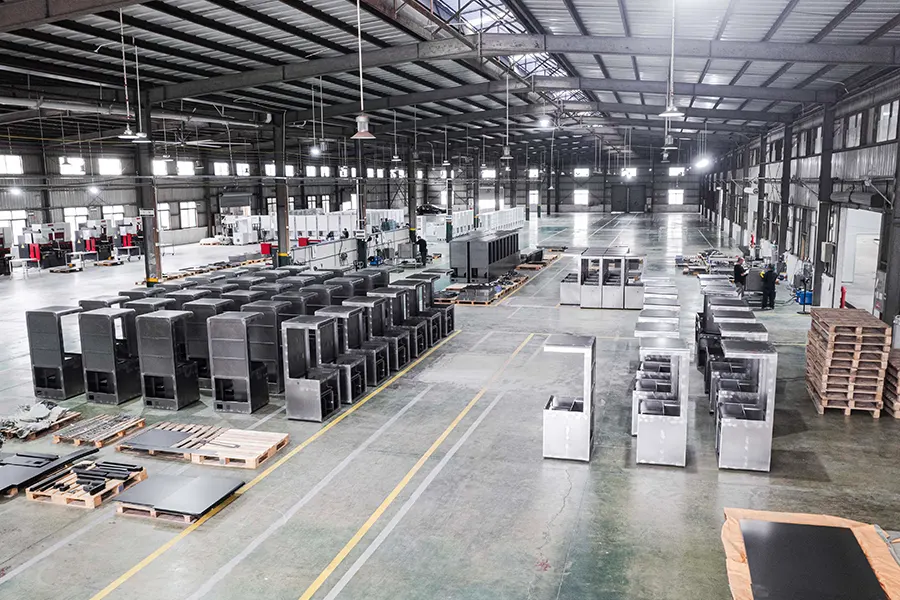
These are process differences, not parts swaps. Groove routing, flange pressing and gland selection happen on the fabrication side. An custom sheet metal enclosure manufacturing partner decides the groove, the entries and the flange, so the fabrication route controls the rating more directly than a sticker does. Do not expect a fixed price gap between the two ratings; the cost lives in how the box is made, and every factory makes it differently.
When IP55 Is the Wrong Choice
IP55 is the wrong buy in four recognizable situations, and each one has a cheaper or tougher answer.
- The bay gets washed down. A washdown lance is nothing like the IPX5 rig: house jets run around 100 L/min through a 12.5 mm nozzle. That duty is IPX6 and up, which means IP65 or IP66 boxes. Buying IP55 for a washdown bay is paying a jet premium for a box that still fails.
- Water stands around the box. Neither digit covers immersion; splash and jet both assume water that drains. Pits, flooded pads and curbed lots need the continuous-immersion codes, and our IP55 versus IP67 enclosure comparison shows where the jet ladder ends.
- The site is sheltered. Under an overhang, inside a carport, or on a covered dock, wind-driven rain never loads the seams. IP54 does the job, and the gasket groove IP55 requires is money spent against weather that never arrives.
- The real enemy is salt. Coastal pole lines lose to corrosion, not ingress. Salt attack needs a material plan — 304 または 316 stainless, hot-dip galvanizing, coated fasteners — because no IP digit measures it. Pair the exposure-matched rating with the alloy spec, on the same drawing.
The NEMA side of the spec sheet adds one trap of its own. NEMA and IP are separate test systems, そして Bud Industries’ rating guide is explicit that the mapping is approximate. A NEMA 3R box does not translate cleanly into IP55; our NEMA 3R rating guide keeps the two systems apart. When a spec quotes both, treat them as two conversations, not one rating written twice.
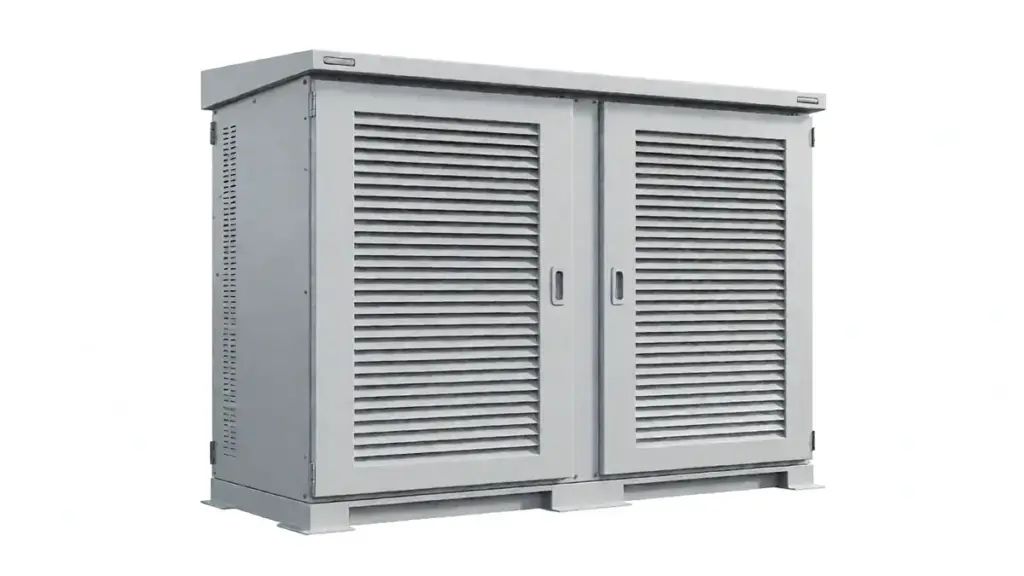
For the sites that genuinely earn IP55, look at what the enclosures guard. Battery cabinets on curbs and flood-prone pads sit behind the energy storage cabinet enclosure series, where street weather hits the seams all afternoon.
A curb-side EV charger enclosure sees street splash, hose wash and sustained rain off the road surface. That is jet duty, not splash duty, and it is why charger enclosures commonly sit at IP55 rather than IP54.
Frequently Asked Questions About IP54 and IP55
Is IP55 better than IP54?
Only against a jet. IP55 survives a 6.3 mm, 12.5 L/min stream at 2.5 に 3 メートル; IP54 survives close oscillating splash. Both share dust code 5. Without rain driven straight at the box, IP55 buys conditions you never face.
Is IP54 waterproof?
IP54 resists water splashed from any direction, which covers ordinary rain landing on a sheltered box. It is not waterproof against a hose, a directed jet or immersion. Fine under an overhang, marginal on an exposed pole, useless once water stands around the enclosure.
What is the difference between an IP55 and an IP66 enclosure?
The second digit’s rig. IP55 faces 12.5 L/min through a 6.3 mm nozzle; IP66 faces roughly 100 L/min through a 12.5 mm nozzle. Eight times the flow is why washdown bays jump past IP55 to IP66.
Is IP54 or IP65 better for outdoor electrical boxes?
IP65 is the stronger package: dust-tight code 6 plus the same IPX5 jet test that IP55 passes. Its water half matches IP55 exactly, so the extra spend buys dust sealing. In dusty yards that digit matters, because code 5 only promises ingress will not disturb safe operation.
Can an IP55 enclosure be pressure washed?
いいえ. The IPX5 rig uses a gentle, focused stream at low pressure, nothing like a washdown lance. Repeated pressure washing needs the IPX6 class rig, roughly 100 L/min through a 12.5 mm nozzle, or a manufacturer statement covering it. IP55 is a weather rating, not a cleaning rating.
Does a higher IP rating always cost more?
Not always, but the build changes. Higher water digits push gasket grooves, matched cable glands and flatter door flanges. No published percentage describes the step from IP54 to IP55, so quote the exposure your site sees and let the factory price that spec.
Which Ingress Rating Fits Your Site
The IP54 vs IP55 decision ends at the site, not on the ladder. Walk the location once before you specify. Note where rain strikes straight on, where a hose lives, and whether water ever sits at the base. Then buy the digit that matches the worst case you actually saw.
- The shared half: both codes carry dust code 5, so the first digit decides nothing in this matchup.
- The deciding half: IP54 handles a close oscillating spray, IP55 handles a 6.3 mm jet at 2.5 に 3 m for at least three minutes.
- The traps: washdown wants IP66, standing water wants immersion codes, and salt air wants a material plan no IP digit provides.
- The paperwork: whatever digit you land on, make the datasheet name the test rig behind it.
If your drawings already name an exposure, send it over. Request a custom enclosure quote and SHIJIE answers your quote within 24 時間.