Sourcing a nema type 12 enclosure for active plant floors determines whether sensitive electronic controls survive fine dust, फाइबर, and liquid drips without suffering catastrophic component failure. Specifying inadequate sealing configurations risks rapid particulate accumulation and costly line shutdowns.
This analysis benchmarks substrate designs against UL 50 construction standards. We evaluate sheet metal thickness and elastomeric gasket configurations to help you secure a reliable indoor seal.
What Is a NEMA Type 12 दीवार?
कोई प्रकार नहीं 12 enclosures protect indoor electrical systems from dust, फाइबर, and light oil or water drips, making them the standard choice for non-washdown manufacturing floors.
Protection Ratings and Environmental Limits
ANSI/NEMA 250 defines Type 12 as an indoor-only enclosure built to safeguard electrical components from airborne hazards. It acts as a reliable barrier on active plant floors.
The enclosure prevents ingress from several common industrial solids:
- गिरती हुई गंदगी: Debris shedding from overhead structures and piping.
- विविक्त: धूल घूम रही है, एक प्रकार का वृक्ष, फाइबर, and flyings.
Gasketed doors prevent damage from dripping water, condensation, and light splashes of non-corrosive liquids, तेल, or coolants. But these units cannot withstand high-pressure hose-directed washdowns, नमक का स्प्रे, or outdoor weather hazards like rain and ice.
Construction Standards and Common Applications
Manufacturers build Type 12 enclosures without factory-punched knockouts to ensure a continuous, reliable seal. Any field penetrations require manual drilling and proper sealing to maintain the rating.
Heavy-duty steel construction, compressed gasket seals, and secure door latches keep contaminants out while protecting personnel from hazardous internal components.
Engineers specify these cabinets to house critical machinery controls, शामिल:
- Control systems: PLC racks and I/O modules.
- Power equipment: Variable frequency drives (VFDs) and motor starters.
- Distribution: Local power distribution systems.
Typical deployment sites include automotive assembly lines, machining centers, pulp and paper mills, and textile factories.
कोई प्रकार नहीं 12 Protection Features
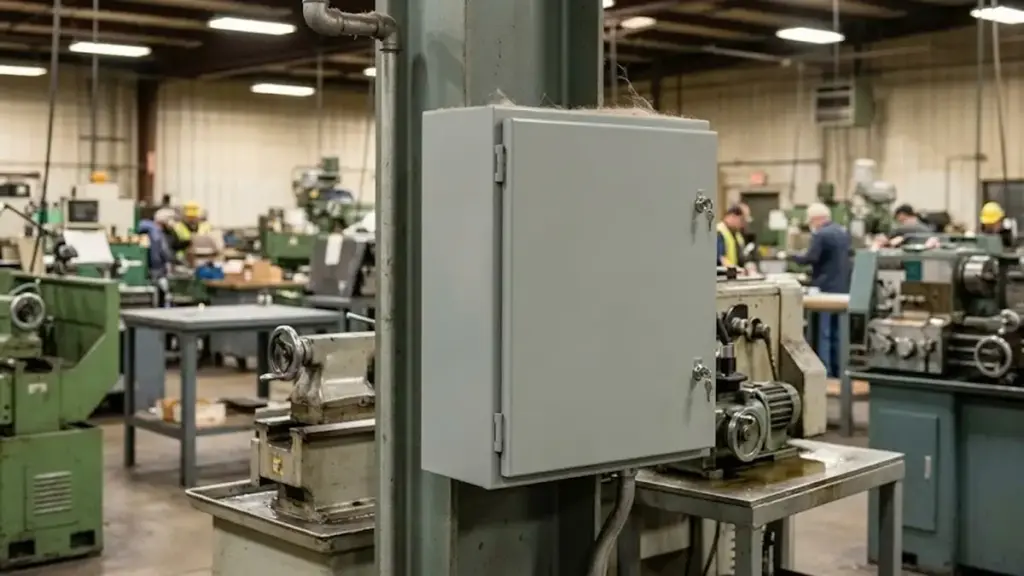
Sealed steel bodies and compressed oil-resistant gaskets block the two most common indoor threats: airborne particulates and non-pressurized liquid drips.
Defense Against Airborne Dust and Solid Particulates
Factory floors generate a continuous stream of airborne particulates that easily compromise unsealed electronics. कोई प्रकार नहीं 12 enclosures act as a physical barrier, sealing out dry contaminants to maintain system reliability.
- Particulate Exclusion: धूल फैलाने वाले ब्लॉक, एक प्रकार का वृक्ष, फाइबर, and flyings typical of indoor industrial manufacturing environments.
- Overhead Protection: Prevents falling dirt, ceiling debris, and building waste from settling inside the housing.
- Sealed Construction: Features non-ventilated bodies built without knockouts or unsealed openings to preserve absolute physical seal integrity.
- Gasket Compression: Uses industrial oil-resistant door gaskets tightly compressed by captive hardware to prevent airborne particulate bypass.
Standard control boxes often fail in dusty environments due to slow particulate accumulation. Installing a Type 12 enclosure stops fine dust from settling on internal power supplies and relays, preventing heat buildup and premature component failure.
Prevention of Liquid Ingress and Hazardous Contact
Machining operations and cooling lines present ongoing liquid hazards. These enclosures handle non-pressurized fluids on the factory floor while protecting plant personnel from high-voltage components.
- Liquid Ingress Defense: Shields internal equipment from dripping water, external condensation, and light splashes of non-corrosive liquids.
- Coolant and Oil Resistance: Stops oil seepage, cutting fluid splashes, and lubricant percolation common near heavy machining and lathes.
- Hose-Down Limits: Excludes protection against high-pressure water jets, direct washdown sprays, or pressurized spraying oil.
- Personnel Safety: Restricts accidental contact with live parts using robust physical barriers, secure locking provisions, and tool-required door access.
If your plant floor undergoes daily pressure washing, you must select कोई नहीं है 4 or 4X enclosures. For general industrial areas with oily mist and light coolant splashes, प्रकार 12 delivers the correct level of protection without inflated hardware costs.
Custom Industrial Enclosures Built To Last
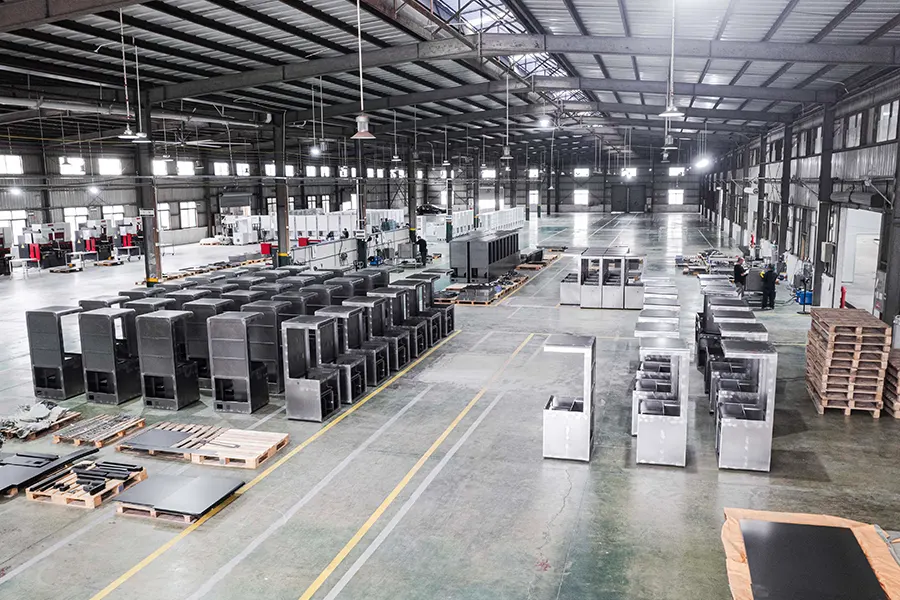
Common Industrial Applications for NEMA Type 12 Enclosures
From CNC machining cells to warehouse conveyor systems, these cabinets house the controls that keep production lines running in contaminated indoor spaces.
Industrial facilities subject electrical systems to harsh, dry contaminants and liquid drips. Standard junction boxes fall short in these areas, making sealed indoor enclosures critical for operational uptime.
Factory Automation and Machining Operations
Factory floors run on highly sensitive electronics that fail when exposed to conductive dust and cutting fluids. Gasketed steel enclosures keep these contaminants away from the primary controls.
- CNC and Machining Electronics: Shields CNC electronics, motion controllers, and machine tool panels from metal shavings, coolant drips, and oil mist on fabrication shop floors.
- Automation Control Cells: Houses programmable logic controllers (PLCs), variable frequency drives (VFDs), and motor starters inside automated assembly and welding cells.
- Operator Interface Protection: Guards operator panels, human-machine interfaces (HMIs), and safety relays from airborne fibers and dust in textile, pulp and paper, and woodworking facilities.
रसद, Warehousing, and Infrastructure Systems
High-volume distribution hubs and facility mechanical rooms require continuous electrical protection. Cardboard dust, packing fibers, and pipe condensation can quickly disrupt unsealed infrastructure panels.
- Material Handling Controls: Protects conveyor drives, sorters, and automated storage and retrieval system (AS/RS) controls from dust and packaging material fibers in logistics hubs.
- Indoor Power Distribution: Encloses power distribution panels, परिपथ तोड़ने वाले, and network equipment in non-washdown indoor industrial environments.
- Facility Infrastructure Systems: Houses HVAC controls, building management systems (BMS), and indoor pump controls in mechanical rooms vulnerable to light drips and condensation.
Material and Design Considerations for NEMA 12 Enclosures
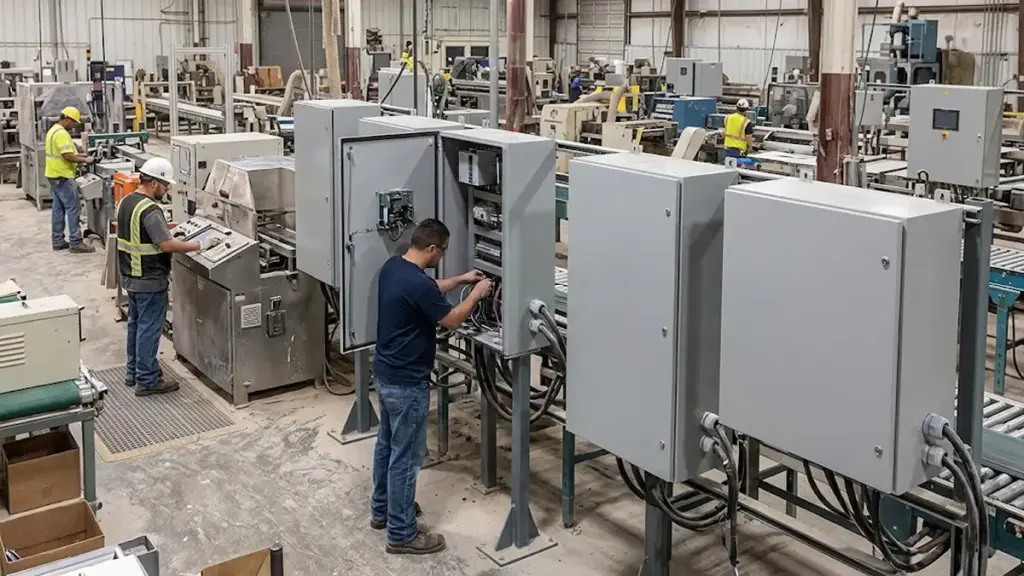
Gauge thickness, base metal choice, and gasket material determine whether the enclosure survives years of particulate exposure without the premium of washdown-rated designs.
Selecting the correct materials and structural designs determines whether your industrial control system survives the factory floor. Ambient plant environments dictate the metal thickness and coatings needed to resist mechanical stress and daily exposure to particulates.
Substrate Selection and Surface Treatments
Choosing the right base metal prevents over-engineering while securing long-term structural integrity. The selection process balances mechanical load demands with weight and chemical compatibility.
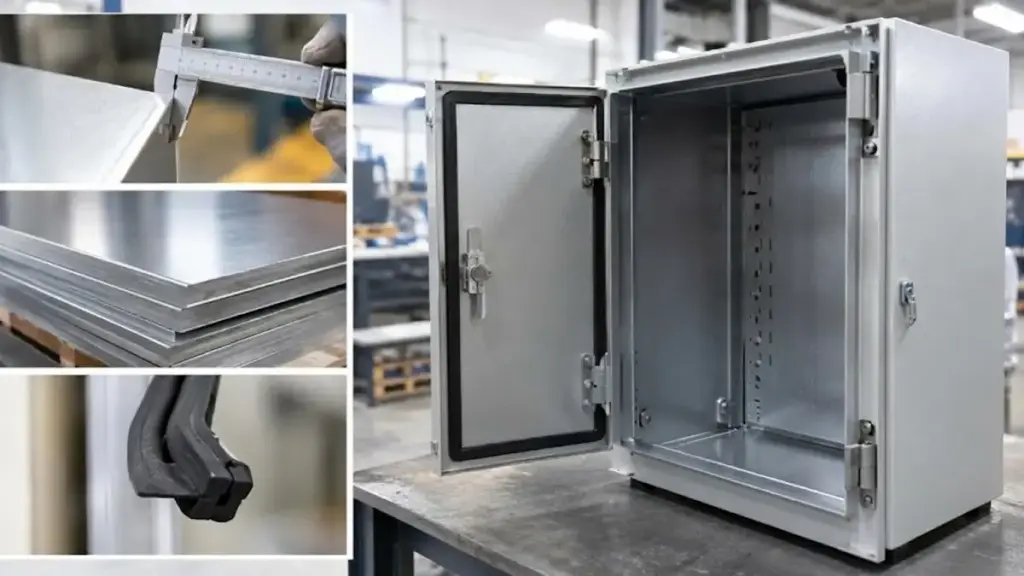
- Carbon Steel Thickness: Wall-mount units require 14 को 16 gauge sheet metal, whereas larger freestanding cabinets need heavier 10 को 12 gauge steel to avoid structural deflection under component weight.
- Finish and Protection: Coated carbon steel demands a phosphatized pre-treatment followed by a polyester powder coating to stop corrosion before it starts.
- स्टेनलेस स्टील: प्रकार 304 और 316 stainless steel provide necessary protection in high-humidity or hygienic indoor zones.
- अल्युमीनियम: This material provides a lightweight alternative that resists oxidation in damp environments.
- Polymeric Materials: Fiberglass and polycarbonate components must comply with ANSI/UL 746C standards to verify thermal stability and mechanical impact strength.
Standardizing on powder-coated carbon steel keeps projects on budget, but switching to stainless steel pays dividends in areas subject to frequent chemical wipe-downs or persistent humidity.
Structural Sealing and Mechanical Construction
Even the thickest alloy fails if the joints allow air or liquid bypass. High-signal NEMA 12 performance relies on precise mechanical geometry and consistent gasket compression.
- यूएल 50 Seam Design: Engineers utilize continuous welded joints ground-smooth or overlapping sheet metal flanges to eliminate particulate ingress.
- Door and Latching: Flush-fitting formed doors resist twisting, while multi-point latches distribute closing forces evenly along the seal.
- Elastomeric Sealing: Oil-resistant foam gaskets create a continuous physical barrier against airborne dust, एक प्रकार का वृक्ष, and seeping coolants.
Gaskets degrade rapidly when exposed to incompatible industrial cutting fluids. Specifying oil-resistant elastomers prevents swelling and sealing failure on CNC machining floors.
Custom NEMA Type 12 Enclosure Solutions
Off-the-shelf cabinets rarely match complex panel layouts. Tailored dimensions, pre-machined cutouts, and integrated thermal management bridge the gap between standard ratings and real system requirements.
| Enclosure Hazard | कोई नहीं है 12 Target Protection | Engineering Implementation |
|---|---|---|
| Airborne Solids | धूल घूम रही है, एक प्रकार का वृक्ष, फाइबर, and flyings | Continuously welded seams and gasketed doors |
| Industrial Fluids | Dripping oil, machining coolants, and water condensation | Oil-resistant gaskets and solid, knockout-free bodies |
| Internal Thermal Load | Heat buildup from active electronics and drives | Closed-loop cooling systems and filtered fan packages |
Structural Design and Protection Standards
We build custom industrial enclosures to serve as the baseline protection for indoor automation. Heavy-gauge steel bodies feature continuously welded seams and oil-resistant gaskets. This combination blocks airborne dust, एक प्रकार का वृक्ष, फाइबर, and dripping non-corrosive liquids from reaching sensitive internal electronics.
These ratings focus strictly on common indoor plant floor hazards. They prevent contamination from machining coolant, oil mist, and physical dirt. They do not design for outdoor weather or high-pressure washdown jets, which avoids the unnecessary material and labor costs of over-engineering. We focus design efforts on managing three key indoor contamination hazards:
- Circulating particulates including textile lint, sawdust, and metal shavings from cutting tools.
- Liquid seepage from overhead pipe condensation, hydraulic fluid leaks, and gravity-fed lubrication drips.
- Physical impacts from material handling equipment and general plant floor activity.
Configuration Options and System Integration
Standard off-the-shelf cabinets rarely match complex system layouts. Tailored configurations integrate thermal management and physical access modifications directly into the design.
High-heat components like VFDs and PLCs require active cooling. Designers specify filtered fans, हीट एक्सचेंजर्स, or closed-loop air conditioners to regulate internal temperatures while keeping the protective seal intact. Physical modifications adapt the raw enclosure to your hardware footprint during fabrication, minimizing field mistakes. We frequently integrate several key features:
- Pre-machined gland plates to allow rapid cable entry while maintaining dust-tight seals.
- Polycarbonate viewing windows for safe monitoring of HMIs and diagnostic displays without opening doors.
- Heavy-duty locking latches to restrict panel access to qualified service technicians.
अक्सर पूछे जाने वाले प्रश्नों
Where do operators install NEMA 12 बाड़ों?
Engineers specify NEMA 12 enclosures for indoor manufacturing facilities, metalworking shops, automotive assembly plants, and packaging lines. These spaces frequently contain circulating dust, debris, non-corrosive splashes, or light oil mist. Common applications include Programmable Logic Controller (PLC) cabinets, Variable Frequency Drive (VFD) बाड़ों, conveyor controls, and HVAC building automation systems located inside mechanical rooms.
Is a NEMA 12 enclosure waterproof?
नहीं, कोई नहीं है 12 enclosures are not waterproof. They resist light splashes, drips, और संक्षेपण, but they cannot withstand high-pressure washdowns, नली-निर्देशित पानी, or submersion. Because these enclosures provide no protection against rain, बर्फ, and extreme weather, the rating limits them strictly to indoor use. For applications requiring true waterproof performance, select NEMA 4, 4एक्स, या 6 बाड़ों.
What is the difference between NEMA 12 and NEMA 13?
While both protect against indoor dust and drips, कोई नहीं है 13 offers enhanced protection against spraying, splashing, and seeping oil or non-corrosive coolants. कोई नहीं है 13 enclosures feature oil-resistant gaskets and oil-tight conduit entries, while standard NEMA 12 enclosures use general-purpose industrial gaskets that can degrade under continuous oil exposure. Designers choose NEMA 13 for machine-mounted controls near cutting fluids or heavy lubrication spray.
Can manufacturers customize NEMA 12 बाड़ों?
हाँ. Fabricators regularly customize NEMA 12 enclosures in dimensions, बढ़ते विन्यास, finishes, and internal layouts. Common modifications include custom cutouts for Human-Machine Interfaces (HMIs), disconnect switches, पुशबटन, and specialized door setups like double doors or rear-access panels. To maintain the NEMA 12 rating, any custom cutouts and installations must use appropriate gaskets to preserve the dust-tight and drip-resistant seal.
What industries require NEMA 12 cabinets?
Industries that rely on NEMA 12 cabinets include automotive manufacturing, सीएनसी मशीनिंग, metal fabrication, pulp and paper processing, textile mills, and logistics hubs. These sectors handle materials that generate heavy dust, फाइबर, or oily residue, requiring reliable protection for sensitive low-voltage control systems without the high cost of stainless steel washdown-rated enclosures.
अंतिम विचार
While unrated utility boxes offer lower upfront costs, deploying certified NEMA Type 12 enclosures is among the most dependable ways to protect plant-floor electronics against airborne dust, oil drips, and premature electrical failure. Specifying the correct steel gauge and oil-resistant seals prevents expensive plant-floor downtime and equipment degradation. Proper indoor protection preserves your operating margins and keeps critical machinery running without interruption.
Don’t guess on fabrication tolerances—verify them. We recommend requesting a sample enclosure to test our continuous weld quality and gasket seals under real factory conditions. Contact our technical team today to discuss custom configurations, paint finishes, and OEM volume pricing.