Une mauvaise compréhension de la comparaison entre IP67 et IP68 gonfle directement les réclamations au titre de la garantie et compromet la fiabilité sur le terrain. S'appuyer sur une simple étiquette crée un faux sentiment de sécurité contre la dégradation à long terme du sceau.. Les acheteurs qui assument une étanchéité absolue sans vérifier les limites de profondeur exactes risquent une défaillance catastrophique de l'équipement dans des environnements marins ou industriels exigeants..
Cette analyse cartographie l'écart de performance entre le strict 1 mètre, 30-Base de référence minute d'IP67 et paramètres d'immersion continue variables d'IP68. Nous évaluons les dangers réels tels que la pression hydrostatique et la rupture des matériaux pour vous aider à spécifier les mises à niveau structurelles exactes requises pour garantir la stabilité opérationnelle à long terme..
Aller au-delà de l’immersion temporaire
IP67 gère les brefs accidents en eaux peu profondes. IP68 permet une immersion continue, mais les acheteurs doivent vérifier les spécifications exactes puisque les tests en laboratoire ignorent l'eau salée et la pression réelle..
Continu vs. Immersion temporaire
IP67 limite l'exposition aux scénarios à court terme. Il gère les brefs accidents, comme laisser tomber un appareil dans des eaux peu profondes, garder les éléments internes au sec suffisamment longtemps pour une récupération rapide. IP68 intervient pour prendre en charge l’exposition continue. Il s'adapte aux environnements exigeants qui nécessitent une résistance prolongée à l'humidité ou des opérations maritimes lourdes.
Spécifications du fabricant et limites du monde réel
IP68 n’a pas de profondeur standard universelle. Les acheteurs doivent vérifier les spécifications exactes du fabricant pour déterminer les limites de l'équipement au-delà de la ligne de base de 1 mètre.. L’étiquette de notation à elle seule ne raconte pas tout.
Les laboratoires testent ces valeurs en utilisant de l'eau douce statique. Cet environnement de test contrôlé ne parvient pas à reproduire les conditions de terrain difficiles, ce qui signifie que les tests IP standard n'offrent aucune garantie de performance contre des dangers spécifiques du monde réel:
- Eau salée: Les environnements marins corrosifs détruisent rapidement les joints d’eau douce standards.
- Jets à pression: Les tests de submersion statique ne préparent pas les enceintes à la dynamique, débit d'eau à grande vitesse.
- Dégradation du joint: Les résultats de laboratoire ignorent la dégradation physique naturelle des joints au fil du temps.
Définir IP68: La variable du fabricant
IP68 n'est pas une norme fixe. Cela signifie simplement que l'appareil dépasse IP67, laissant la profondeur et la durée exactes entièrement dépendantes des paramètres de test spécifiques du fabricant.
La spécification flottante de la profondeur et de la durée de l'immersion
La CEI 60529 la norme laisse les paramètres exacts d’un indice IP68 grands ouverts. Il stipule seulement que l'appareil doit survivre à des conditions plus sévères que la norme de 1 mètre., 30-Base de référence minute IP67. Cela crée un énorme écart de performances entre les différents produits. Vous verrez peut-être un gadget grand public évalué pour 1.5 mètres sur 30 minutes, tandis que les équipements marins industriels manipulent facilement 3 mètres pour 72 heures. Les deux portent légalement exactement le même badge IP68.
Se fier uniquement à l’étiquette signalétique est une voie rapide vers une panne d’équipement. Les ingénieurs doivent fouiller dans la documentation. Vous devez demander des rapports de tests explicites et vérifier les conditions exactes de profondeur et de durée avant d'approuver toute revendication IP68 pour un déploiement sur le terrain..
Variables de test et exigences d’étanchéité
Les conditions de laboratoire correspondent rarement au déploiement réel. Les tests IP68 standard reposent strictement sur la statique, eau douce. Si votre équipement fonctionne en eau salée, bains chimiques, ou environnements chlorés, la cote standard ne signifie rien sans une validation supplémentaire et des revêtements de protection spécialisés.
Les fabricants construisent cette capacité de submersion de qualité supérieure en utilisant des mises à niveau techniques spécifiques. Les conceptions IP68 robustes nécessitent généralement:
- Structures plus épaisses: Pour résister à une pression hydrostatique accrue à de plus grandes profondeurs.
- Contrôles de processus stricts: Éliminer les variations microscopiques de fabrication lors de l’assemblage.
- Matériaux avancés: Utilisation de composants haut de gamme tels que des joints toriques en fluorocarbone pour maintenir l'intégrité du joint à long terme.
Une étanchéité parfaite crée son propre ensemble de problèmes. Un boîtier IP68 emprisonne l'air à l'intérieur, et il ne bloque pas la condensation interne causée par des variations brusques de température. Les concepteurs doivent intégrer des évents d'égalisation de pression ou utiliser des composés d'enrobage pour protéger l'électronique interne de cette humidité auto-générée..
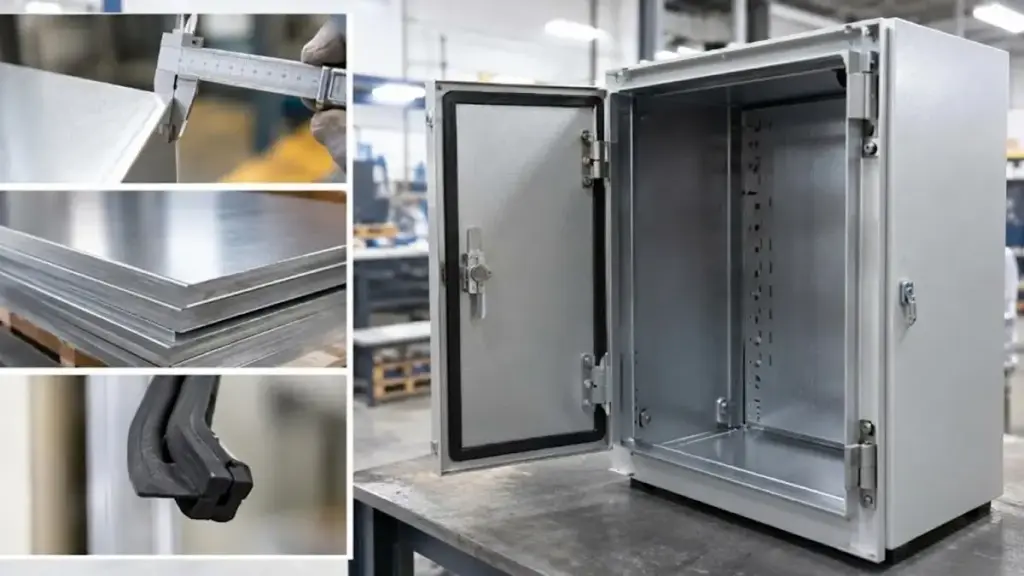
Sécurisez votre équipement avec des boîtiers industriels haut de gamme
Tests de pression et spécifications de profondeur
IP67 limite les tests à la statique, environnements à basse pression jusqu'à 1 mètre. IP68 nécessite dynamique, simulations de chambres à haute pression pour valider l'intégrité à long terme dans des applications difficiles du monde réel.
| Spécification | Protocole IP67 | Protocole IP68 |
|---|---|---|
| Plage de profondeur | 0.15 à 1 mètre | 1.5 à 10 mètres (Définition du fabricant) |
| Délai d'exposition | Exactement 30 minutes | Immersion continue |
| Équipement d'essai | Réservoir d'eau sans pression | Chambre de pression en acier inoxydable |
| État de l'eau | Statique, température ambiante | Circulation active, température contrôlée |
Limites de profondeur IP67 et tests de pression statique
Les techniciens de laboratoire effectuent la validation IP67 à l'aide de simples, réservoirs d'eau sans pression. Ils submergent complètement les appareils à des profondeurs précises entre 0.15 et 1 mètre pour exactement 30 minutes pour vérifier l’intégrité initiale du joint.
- Pression hydrostatique: Exerce une basse pression à proximité 0.1 barre à profondeur maximale.
- Portée de protection: Protège le matériel contre les éclaboussures temporaires ou les chutes accidentelles dans les eaux peu profondes.
- Vulnérabilité connue: Échoue rapidement sous des jets d'eau à haute pression ou sous la dynamique des fluides active.
Ces tests de base fournissent une référence rentable pour les équipements grand public et industriels légers.. Les ingénieurs s'y fient pour confirmer l'étanchéité à court terme, éviter les dépenses liées à la sur-ingénierie des produits destinés aux environnements secs.
Normes d'immersion continue IP68 et de pression variable
IP68 supprime le capuchon rigide de 1 mètre, obligeant les fabricants à définir des exigences exactes en matière de profondeur pour une immersion continue. Suivant 2026 normes de l'industrie, les équipes d'ingénierie ciblent fréquemment des profondeurs d'immersion allant de 1.5 à 10 compteurs pour les déploiements intensifs.
- Simulation de pression: Utilise des chambres de pression en acier inoxydable pour reproduire des environnements hydrostatiques élevés.
- Variables dynamiques: Intègre une circulation d'eau active et des contrôles de température stricts.
- Objectif opérationnel: Valide les performances à long terme des équipements marins et des capteurs sous-marins.
Les installations de test exécutent ces simulations complexes pour révéler les micro-fuites ou la fatigue des joints qui manquent aux réservoirs statiques.. Ce protocole rigoureux reproduit les dures conditions du monde réel, garantir que le boîtier protège les composants internes pendant des cycles de fonctionnement prolongés.
Quand IP67 est-il suffisant pour les équipements électroniques?
IP67 équilibre parfaitement le coût et la protection pour les appareils confrontés à des éclaboussures accidentelles ou à de brèves immersions peu profondes plutôt qu'à une immersion continue en eau profonde..
Applications courantes pour la protection IP67
Vous avez rarement besoin de niveaux de submersion extrêmes pour une fiabilité standard. IP67 sécurise le matériel dans les environnements où l'exposition à l'eau reste temporaire et accidentelle.
- Appareils grand public au quotidien: Les smartphones et les appareils portables gèrent facilement la pluie, déversements accidentels, et des chutes rapides dans les eaux peu profondes.
- Équipement de plein air: Les randonneurs et les photographes de plein air comptent sur l'équipement IP67 pour résister sans problème aux éclaboussures soudaines ou aux brèves trempettes de la piscine..
- Transformation industrielle et agroalimentaire: Les installations utilisent des outils IP67 pour les lavages hygiéniques car l'équipement ne reste pas continuellement sous l'eau..
Équilibrer les coûts et les besoins d’exposition à l’eau
Spécifier IP68 lorsque vous n’avez besoin que d’IP67 épuise votre budget matériel. IP67 offre une solution économique pour les environnements confrontés à une humidité accidentelle au lieu d'une immersion continue. Les ingénieurs testent les équipements IP67 en neuf, eau statique, établir une base de référence qui répond parfaitement aux demandes standards des consommateurs et de l’industrie légère.
Les acheteurs économisent de l'argent en choisissant IP67 plutôt que IP68 lorsque leurs opérations évitent des conditions extrêmes. Si votre cas d'utilisation spécifique exclut les jets haute pression, environnements marins difficiles, ou plongées prolongées en eau profonde, IP67 offre exactement, une protection fiable sans vous obliger à payer pour une technologie d'étanchéité haut de gamme que vous n'utiliserez jamais.
Points de défaillance critiques dans les boîtiers de haute qualité
Les boîtiers haut de gamme échouent principalement à cause de la dégradation des joints, corrosion chimique, et contraintes mécaniques. Le dépassement des spécifications du fabricant en matière de profondeur ou de pression garantit une pénétration rapide de l'eau..
Dégradation des joints et corrosion des matériaux
Les boîtiers haut de gamme dépendent fortement de leurs joints pour empêcher les éléments d'entrer. Exposition continue aux UV, cyclage de température sévère, et les contraintes mécaniques dégradent ces joints avec le temps. Cette usure compromet directement les capacités d'étanchéité de l'unité et laisse l'électronique interne vulnérable..
- Indicateurs primaires: Fissures visibles le long du joint, buée interne dans des boîtiers transparents, et la corrosion active aux points de connexion constituent les principaux signes avant-coureurs d'une défaillance du joint..
- Exposition chimique: Les tests d'évaluation standard utilisent de l'eau douce contrôlée. L'eau salée et les produits chimiques industriels agressifs accélèrent la corrosion, permettant aux liquides de pénétrer dans les enceintes qui ont facilement passé les tests standards d'eau douce.
Faiblesses mécaniques et surcharge environnementale
L'intégrité structurelle dicte les performances à long terme sur le terrain. Des presse-étoupes mal assortis et des points d'entrée non protégés créent les voies les plus courantes de pénétration de l'eau et de la poussière.. Les erreurs d'installation et les conditions environnementales extrêmes contournent facilement les conceptions de boîtiers autrement solides.
- Dommages physiques: Un serrage excessif des fixations ou des impacts physiques directs provoquent des fissures dans les boîtiers extérieurs.. Ces dommages structurels annulent instantanément les indices de protection.
- Surcharge environnementale: Pousser les boîtiers au-delà de leurs spécifications exactes invite au désastre. Exposer une unité à des profondeurs d'eau, durées d'immersion, ou des jets à haute pression qui dépassent ses limites de conception provoquent une défaillance structurelle rapide.
Choix du matériau: Pourquoi 316 Acier inoxydable pour IP68?
316 l'acier inoxydable offre la rigidité structurelle et la défense chimique nécessaires pour maintenir des joints étanches sous la pression hydrostatique continue d'une immersion IP68.
Résistance à la corrosion en cas de submersion prolongée
Les appareils IP68 résistent à une exposition continue à des environnements agressifs comme l'eau salée ou les piscines chlorées.. Pour survivre à ces conditions sans se dégrader, l'enveloppe extérieure nécessite une défense chimique exceptionnelle.
Les ingénieurs précisent 316 l'acier inoxydable car il contient du molybdène. Cet élément spécifique prévient activement la corrosion par piqûres et fissures dans les environnements marins et industriels difficiles.. Il arrête la rouille microscopique avant qu'elle ne commence, garder l'enceinte complètement intacte pendant des années de submersion continue.
Intégrité structurelle sous haute pression d’eau
Un indice IP68 exige une protection bien au-delà de la profondeur standard de 1 mètre. Une immersion plus profonde applique une pression hydrostatique importante directement contre le boîtier de l'appareil.
Les propriétés mécaniques rigides de 316 l'acier inoxydable supporte cette charge physique sans effort. Le métal comprime les joints toriques et les joints d'étanchéité uniformément sur tous les points d'étanchéité.. Là où les métaux plus mous peuvent se plier ou se déformer sous une pression constante, 316 l'acier inoxydable conserve sa forme précise pour bloquer complètement la pénétration de l'eau.
Applications du monde réel: Stockage d'énergie submersible
Le stockage d'énergie submersible repose sur des indices IP stricts pour survivre à une immersion continue dans l'eau de mer et aux tempêtes extrêmes., protéger les actifs critiques du réseau et la robotique en eau profonde.
Stockage d’énergie marine et robotique sous-marine
Les déploiements en eau profonde détruisent facilement l'électronique standard. Pour éviter des pannes catastrophiques, Les boîtiers IP68 protègent activement les batteries lithium-ion et à semi-conducteurs contre une exposition continue à l'eau de mer. Ce niveau de défense est obligatoire pour les systèmes fonctionnant bien sous la surface.
- Générateurs marémoteurs et packs sous-marins: Fiez-vous au matériel IP68 pour éviter la corrosion et les courts-circuits au-delà de 1 mètre de profondeur.
- Drones et ROV sous-marins: Utilisez les normes IP68 pour fonctionner en toute sécurité à des profondeurs de 1.5 à 3 mètres pendant plusieurs heures.
- Unités marines industrielles: Subissez des tests rigoureux du fabricant au-delà des normes standard pour gérer les concentrations de sel difficiles et la pression d'eau extrême..
Stockage connecté au réseau dans les zones inondables
Les infrastructures de réseau à basse altitude nécessitent une défense physique contre les tempêtes extrêmes. Les opérateurs de réseau installent des boîtiers IP68 dans les zones sujettes aux inondations pour garantir que les parcs de batteries survivent à une immersion continue. 1 mètre. Cela évite la perte du système lorsque les eaux de crue ne se retirent pas rapidement..
- Stabilité de l'eau stagnante: Les modèles IP68 offrent une stabilité opérationnelle à long terme lors d'inondations prolongées.
- Défense temporaire contre les inondations: Les unités d'alimentation submersibles portables déploient une protection IP67 comme une option économique pour une exposition intermittente ou à court terme à l'eau..
- Entretien après les inondations: Les équipes de maintenance inspectent régulièrement les joints des équipements après toute exposition aux inondations afin de maintenir une fiabilité de base contre l'humidité..
Contrôle qualité de SHIJIE pour les commandes de qualité supérieure
SHIJIE valide chaque boîtier de haute qualité grâce à des tests rigoureux de poussière sous vide, immersion en eau profonde, et des cycles de vieillissement accélérés pour garantir des performances irréprochables dans des environnements industriels difficiles.
Protocoles de test d'immersion dans la poussière et l'eau
Le respect de normes strictes de protection contre la pénétration nécessite de pousser les boîtiers au-delà des conditions de base du laboratoire. SHIJIE exécute un protocole de test rigoureux en trois phases pour valider la résistance absolue à la pénétration avant qu'une unité ne quitte l'installation.
- Test de poussière sous vide: Les ingénieurs SHIJIE soumettent les boîtiers complets à des tests sous vide avec du talc fin pendant plus de huit heures pour confirmer l'étanchéité absolue à la poussière..
- Immersion profonde: Les testeurs submergent les unités au-delà des profondeurs standard, dépassant un mètre pendant des durées prolongées pour valider les spécifications IP68 personnalisées.
- Simulation haute pression: Les équipes qualité effectuent des tests à haute pression pour vérifier l'intégrité des joints en silicone et prévenir les fuites structurelles dans des conditions exigeantes..
Validation des lots et inspections avant expédition
La cohérence entre les grandes séries de production distingue les fournisseurs fiables des autres. Les inspecteurs effectuent des tests fonctionnels complets sur les joints et les garnitures de chaque lot à l'aide de systèmes automatisés de détection des fuites.. Cela supprime les erreurs humaines et garantit des normes de protection uniformes pour les commandes groupées..
Les environnements réels dégradent les matériaux plus rapidement que l'eau statique. Pour lutter contre cela, l'installation effectue des cycles de vieillissement accélérés, exposer les appareils à des changements extrêmes de chaleur et d’humidité pour garantir une durabilité à long terme. SHIJIE documente les conditions de test exactes pour chaque commande afin de garantir des performances fiables dans les environnements marins et industriels difficiles..
Foire aux questions
Quelle est la principale différence entre IP67 et IP68?
Les deux classifications offrent une protection complète contre la poussière. La principale différence réside dans la résistance à l’eau. Les appareils IP67 survivent à une immersion jusqu'à 1 mètre d'eau pour un maximum de 30 minutes. Les appareils IP68 gèrent une immersion continue au-delà 1 mètre. Les fabricants précisent les profondeurs et durées exactes pour leurs produits IP68 spécifiques.
L'IP68 peut-il résister aux jets d'eau à haute pression?
Non. L'indice IP68 garantit une protection contre la submersion continue, pas de jets d'eau puissants. Les jets à haute pression peuvent pousser l'eau au-delà des joints. Si vous avez besoin d'une protection contre les tuyaux lourds ou les lavages industriels, vous devez spécifier des appareils avec des classifications IP66 ou IP69K.
Combien de temps un appareil IP68 peut-il rester sous l'eau?
L’heure exacte dépend des normes de test du fabricant. Au minimum, IP68 dépasse la limite de 30 minutes d'IP67. De nombreux appareils électroniques grand public classés IP68 30 minutes à 1.5 mètres, pendant toute la durée de vie des équipements marins spécialisés 24 heures ou plus à de plus grandes profondeurs. Vous devez consulter le manuel spécifique du produit pour vérifier les limites exactes.
Est-il IP68 complètement étanche?
IP68 représente un haut niveau de résistance à l'eau, mais aucun appareil ne reste étanche en permanence dans toutes les conditions. Les installations de test appliquent cette notation en utilisant des produits frais, eau statique dans des paramètres contrôlés. L'usure quotidienne, chutes physiques, ou l'exposition à l'eau salée et au chlore dégradera les joints au fil du temps.
Pourquoi les produits IP68 coûtent-ils plus cher que les produits IP67?
Atteindre un indice IP68 nécessite des joints plus serrés, matériaux haut de gamme comme le silicone de haute qualité, et une ingénierie complexe pour égaliser la pression interne. Les fabricants investissent également massivement dans des équipements de tests rigoureux, comme les chambres de pression, pour valider des capacités d’immersion plus profondes et plus longues.
Quelle note fonctionne le mieux pour les capteurs sous-marins?
IP68 est le choix nécessaire pour les capteurs sous-marins. Parce que ces appareils fonctionnent en permanence immergés, souvent à des profondeurs supérieures à 1 mètre, la protection temporaire de 30 minutes IP67 est insuffisante. IP68 offre l'intégrité d'étanchéité à long terme requise pour que les pompes submersibles et les instruments marins fonctionnent de manière fiable.
Pensées finales
S'appuyer sur des étiquettes IP68 génériques sans vérifier les paramètres de test réels expose vos déploiements à des pannes d'équipement catastrophiques.. Alors que les boîtiers de base offrent des coûts initiaux inférieurs, exiger des spécifications exactes de profondeur et de durée, étayées par des tests rigoureux, est le seul moyen de protéger votre matériel contre les environnements corrosifs et la dégradation des joints à long terme. Spécifier des matériaux haut de gamme comme 316 l'acier inoxydable garantit que votre investissement survit à la pression hydrostatique continue sans compromettre les performances.
Arrêtez de deviner les limites de l'enceinte et commencez à valider vos exigences spécifiques en matière de submersion avec de véritables données d'ingénierie.. Nous vous recommandons de lancer une commande d'échantillon pour voir comment nos protocoles de validation sous vide et en eau profonde gèrent directement votre stress opérationnel exact.. Contactez l'équipe d'ingénierie SHIJIE pour discuter de vos spécifications OEM et garantir une fiabilité fiable., protection de haut niveau pour votre prochain déploiement.